
Why I Hate Poverty Simulations
One Winter Night And The Great Cardboard Cosplay

This year’s One Winter Night event is even more laughable as the city recently shutdown a a viaduct just blocks away from the upcoming event because it had become a homeless encampment!
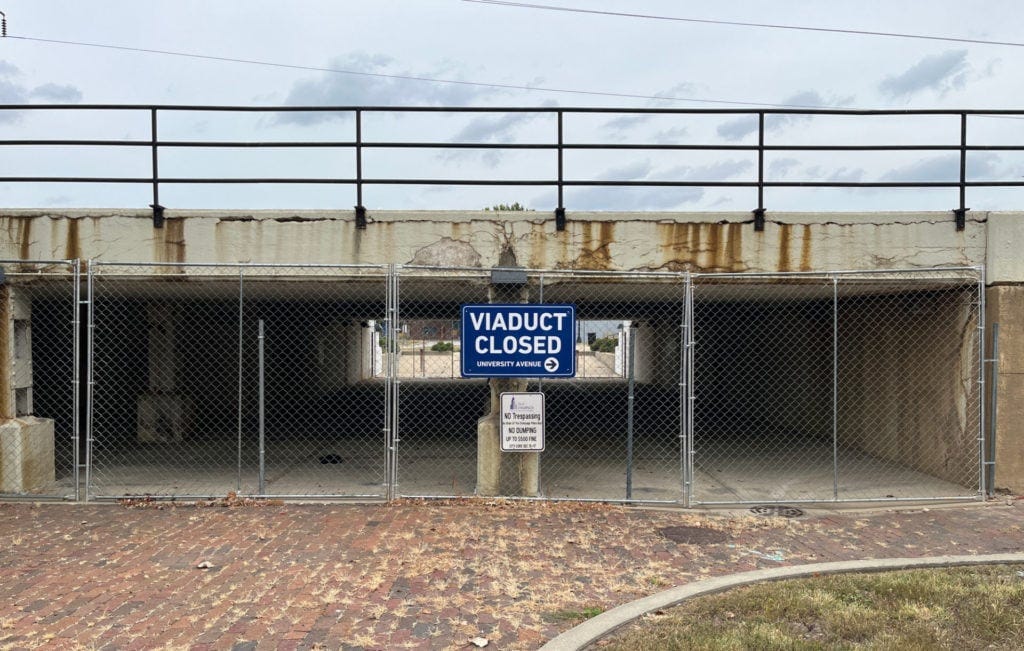
Click here for details on viaduct shutdown!
Every year in Champaign, when the air gets cold enough to make your face tingle and your ears rethink their life choices, our community rolls out a very particular kind of performance art. It is called One Winter Night, and if you have somehow missed it, imagine a pop-up village of cardboard boxes in downtown Champaign filled not with people who are actually unhoused but with well-fed volunteers who have paid for the privilege of pretending to be.
The official line is noble enough. Raise awareness. Support services. Build empathy. It is all wrapped in the language of caring. But poverty simulations never sit right with me. They feel like the theatrical version of empathy. Costume-based compassion. The emotional equivalent of ordering the sampler platter instead of the full meal.
And nowhere does this strange ritual hit harder than when we stage it on the very same streets where real unsheltered folks would be told to move along.
Nothing says “We understand your struggle” quite like dressing up as the struggle for one single night while the people actually living it are pushed out of sight. At its best, it is misguided. At its worst, it is a civic magic trick: now you see poverty, now you do not.
The Cardboard Boxes No One Else Is Allowed To Use
Here is the part that really sets me off.
Champaign will never let actual unhoused people set up cardboard boxes downtown. The city would remove them. Police would be called. Outreach would mobilize. Property owners would complain. Someone would file an email with “concerned citizen” in the subject line.
But once a year, for one carefully staged fundraiser, suddenly cardboard architecture is welcomed like it is an art installation at Ebertfest. People decorate their boxes. They take selfies in their boxes. They write inspirational messages on the sides of their boxes. They make the box experience “meaningful.”
Meanwhile, if a man sleeping under the Neil Street underpass writes anything on cardboard, it is considered loitering.
There is something profoundly off about a world where pretending to be homeless is celebrated but being homeless is criminalized.
The Comfort of a Controlled Struggle
Poverty simulations let people dip one toe into hardship but never actually get wet. It is suffering with training wheels. A hardship buffet where you can try the mac and cheese without committing to the entree.
You can step into a cardboard box for a single night, in full winter gear, surrounded by friends, with a hot chocolate in hand and a guaranteed warm bed waiting at home. You can “experience” the cold while knowing the cold cannot touch you.
That is not empathy. That is cosplay.
Empathy is talking to people whose stories make you uncomfortable. Empathy is challenging policies that produce the conditions people are living in. Empathy costs something. Comfort. Time. Assumptions. Energy.
Empathy is not a photo op.
But simulations package struggle into something palatable. Digestible. Marketable. Something you can show your coworkers on Monday morning without needing to wrestle with the reasons the event exists at all.
It turns poverty into a theme night.
Awareness Without the Uncomfortable Parts
Every poverty simulation I have seen avoids the biggest truth of all: poverty is not just a condition. It is a structure. It is policy, housing markets, wages, health care, transportation, trauma history, mental health care access, criminal legal systems, and the thousand small obstacles that pile up like gravel.
A simulation cannot simulate any of that.
What it can do is give people a sense that they “get it” because they endured mild discomfort in a supervised environment for a couple of hours.
It is like doing a police ride-along and thinking you now understand policing. Or doing a mock trial and thinking you understand the legal system. Or playing Operation and thinking you are a surgeon. It is the appearance of understanding without the substance.
Awareness is good. But awareness that never challenges the underlying system just becomes an annual ritual we perform to make ourselves feel like we have done something.
The “At Least We Say Unhoused Now” Problem
And yes — I hear the organizers proudly point out that the event uses the preferred language. “We do not say homeless. We say unhoused.” That is nice. It is accurate. It matters. And it is the epitome of performative change.
Changing the label while leaving the conditions unchanged is like repainting the walls of a collapsing building. Technically it is improvement, but no one is fooled.
Language upgrades do not matter much if the people whose lives you are simulating cannot sleep downtown without being harassed or displaced.
At some point, we have to ask: who is this event really for? Who benefits? Whose comfort is being maintained?
Because it looks a whole lot like the unhoused are not the primary beneficiaries. The participants are.
Enjoy The Spectacle
Look — I get why people want to participate. They want to help. They want to do something. When you are faced with a big social problem, it feels good to contribute in a tangible way, even if that way is symbolic. There is nothing wrong with caring. There is nothing wrong with fundraising. There is nothing wrong with wanting to make a difference.
But there is something deeply weird about staging homelessness like a seasonal festival.
If someone wants to support the unhoused, there are a hundred ways that do not require a costume. Volunteer. Donate directly. Advocate for housing. Show up at city council. Talk to people who are actually living it instead of pretending to.
I am not against the intention. I am just allergic to the spectacle.
Because at the end of the night, when the cardboard villages come down and the participants go home to warm beds and full fridges, there will still be people outside in the cold who did not volunteer for the role.
And they will not be given cardboard boxes and hot chocolate. They will be given citations.
So yes, Champaign — enjoy your spectacle. Enjoy your annual cosplay. Enjoy the boxes no one else is allowed to use.
I just hope someday we put half as much energy into solving the problem as we do into simulating it.